




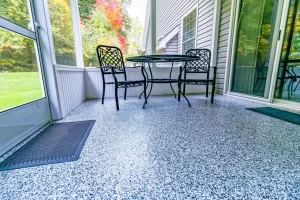


A Smarter Alternative to Tile Demolition
Yes, microcement can often be applied over existing tile when the tiled surface is stable, properly bonded, and suitable for professional preparation. This approach allows homeowners to achieve a seamless, contemporary finish without automatically removing the existing floor or wall covering. For many renovation projects, retaining a sound tile substrate can reduce demolition, debris, disruption, and the labor costs associated with tearing out and rebuilding the surface below.
However, applying microcement over tile is not simply a matter of coating the tile and waiting for it to dry. The existing surface must be evaluated carefully, and the correct preparation system must be selected. Loose tiles, movement, significant cracks, moisture concerns, or other underlying problems must be identified before work begins. A dependable result starts with a stable foundation and a system designed to manage the joints and variations within the existing tiled surface.
The Forcrete Reinforced System
Apex Microcement & Overlays LLC uses Forcrete products, including the Forcrete reinforced system, for suitable microcement-over-tile applications. This system incorporates a reinforcing mesh layer and two build coats before the decorative finish is developed. Together, these preparation layers help strengthen the existing tile or floor assembly and create a more uniform base for the microcement application.
The mesh provides reinforcement across the prepared surface, including the many joints that naturally exist in a tiled installation. The two build coats then help embed the reinforcement and establish a smoother, more consistent working surface. This preparation is especially valuable because tile floors can contain grout-line depressions and minor differences in height. Building a stable, even foundation helps reduce the chance that these variations will remain visible through the finished microcement.
Smoothing Grout Lines and Height Imperfections
Existing tile is rarely perfectly level. Grout joints sit below the face of the tile, and individual tiles may have slight height differences caused by the original installation or years of use. If these conditions are not addressed, they may affect the continuity and appearance of the new finish. The reinforced system helps smooth these transitions before the decorative microcement layers are applied.
The two build coats are important during this stage because they allow the installer to create a more uniform base across tile faces, grout lines, and minor height variations. They do not eliminate the need for careful evaluation or corrective work where serious problems exist, but they provide a structured way to prepare a sound tiled substrate. The result is a cleaner foundation for the seamless movement and refined texture associated with microcement.
Saving the Cost and Disruption of Demolition
Avoiding tile demolition can be one of the strongest advantages of this installation method. Removing existing tile may involve substantial labor, noise, dust, waste disposal, and possible repairs to the substrate beneath it. It can also extend the renovation schedule before the new finish is even ready to be installed. When the existing tile is secure and compatible with the system, applying microcement over it may simplify the project and preserve more of the existing construction.
These efficiencies may create meaningful cost savings, although every project should be assessed individually. Preparation remains an essential part of the work, and damaged, loose, unstable, or moisture-affected surfaces may require repair or removal. The goal is not to skip necessary work, but to avoid unnecessary demolition when the existing tiled surface can serve as a reliable base for the reinforced system.
Creating a Seamless New Appearance
Once the reinforced base has been properly prepared, the decorative microcement layers can create a continuous surface over the former tile layout. Visible grout lines and repeated tile patterns give way to a more unified appearance with customized color, texture, and movement. This can help a room feel calmer, more spacious, and better connected to a modern or luxury interior design.
Microcement also allows the finished surface to be personalized rather than limited to a manufactured tile pattern. The tone and texture can be selected to coordinate with wood, stone, plaster, cabinetry, and other architectural elements. Because the finish is applied by hand, it carries subtle variation and craftsmanship while maintaining the visual continuity many homeowners want from a renovation.
Is Your Existing Tile Suitable?
Not every tiled surface is an automatic candidate for microcement. Before recommending an installation, Apex reviews the condition and bond of the tile, the stability of the substrate, cracks or movement, moisture exposure, surface contamination, and differences in elevation. Any hollow, loose, damaged, or unstable areas must be addressed so they do not compromise the new finish.
A professional assessment is the best way to determine whether the Forcrete reinforced system is appropriate for a particular floor or wall. For suitable surfaces, its mesh layer and two build coats provide reinforcement, help smooth minor height imperfections, and prepare the tiled area for a refined seamless finish. Apex Microcement & Overlays LLC can evaluate your Kauai property and explain whether applying microcement over the existing tile can deliver the desired result while avoiding the added cost and disruption of demolition.