


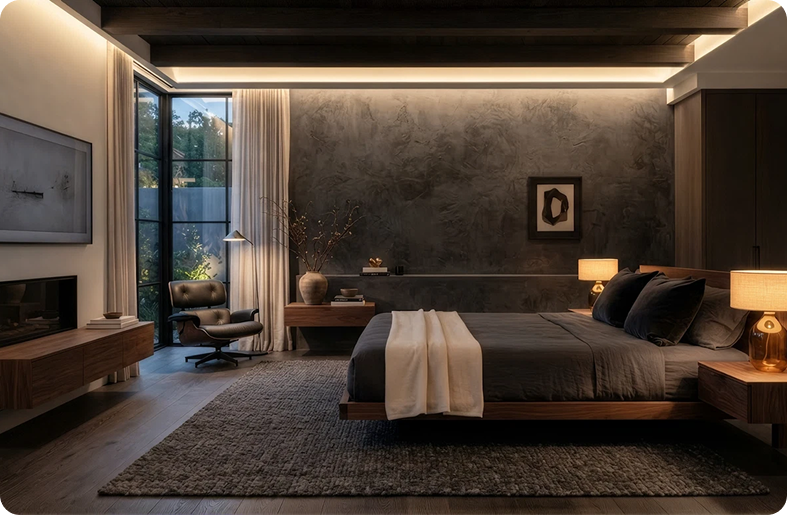
Understanding Venetian Plaster
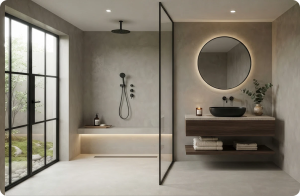
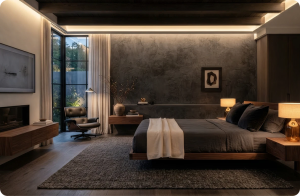
Venetian plaster is a decorative wall finish valued for its depth, movement, and refined handcrafted appearance. Rather than creating a flat field of uniform color, it develops subtle variations that respond beautifully to natural and artificial light. Depending on the materials and application method, the finished surface may appear soft and mineral-like, gently textured, or smooth and polished.
The technique involves applying multiple thin layers with careful control over pressure, direction, and movement. Each layer contributes to the final visual character of the wall. Because the finish is applied by hand, it offers a level of individuality that standard wall coverings and conventional paint cannot easily reproduce. The completed surface becomes an integral part of the room’s design rather than simply serving as its background.
Venetian Plaster Versus Standard Paint
Paint is a practical and widely available way to introduce color, but it generally creates a more consistent and visually flat finish. Venetian plaster adds dimension through layered tonal movement and the natural marks of skilled application. Light interacts with the surface differently throughout the day, revealing variations that give the room greater depth and atmosphere.
This does not mean Venetian plaster should replace paint throughout every home. Its greatest impact often comes from thoughtful placement. It may be used to give architectural importance to a particular room, wall, entrance, or interior feature. The decision depends on the desired atmosphere, design priorities, budget, and relationship between the finish and the surrounding materials.
Where Venetian Plaster Works Best
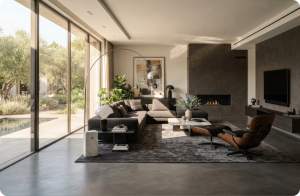
Venetian plaster can complement living rooms, dining areas, bedrooms, entrances, offices, hospitality interiors, and selected commercial environments. It is especially effective in spaces where lighting can emphasize its layered texture and movement. Large walls may become artistic focal points, while smaller applications can introduce understated elegance without dominating the interior.
The finish can be adapted to suit a variety of design styles. Warm earth tones may support organic or Mediterranean-inspired interiors, while pale neutrals can complement minimalist and contemporary homes. Deeper colors can produce a more dramatic atmosphere. Careful selection ensures the finish feels connected to the architecture rather than applied as an isolated decorative effect.
Is Venetian Plaster Worth the Investment?
For homeowners who value craftsmanship and visual individuality, Venetian plaster can be a worthwhile investment. Its appeal lies in the quality of the finished surface rather than simple color coverage. A professionally created application can give an otherwise ordinary wall a sense of permanence, depth, and architectural significance.
Its value is also connected to personalization. Colors, texture levels, movement, sheen, and placement can be developed around the individual property. This makes Venetian plaster especially appealing in luxury homes where the objective is not merely to follow a trend but to establish a distinctive and cohesive interior identity.
What Influences the Final Result?
The quality of Venetian plaster depends on the condition and preparation of the wall, the selected material, the complexity of the desired effect, and the installer’s technique. Existing cracks, unevenness, contamination, or unstable areas may need to be addressed before decorative work begins. Proper preparation creates a more dependable foundation for the finish.
Lighting should also be considered during the design stage. Natural daylight, recessed lighting, wall-mounted fixtures, and directional illumination can each reveal the surface differently. Reviewing samples within the actual environment can help clients understand how a selected color and texture may appear throughout the day.
Caring for Venetian Plaster
Maintenance requirements vary according to the product, finish, protective treatment, and location of the installation. Some applications may require only gentle dusting or cleaning with suitable products, while others may need more specific care. Harsh chemicals, abrasive tools, and inappropriate cleaning methods should be avoided unless approved for the particular system.
Clients should receive clear care guidance after installation. Understanding how to protect the surface helps preserve its appearance and prevents accidental damage. Professional advice is particularly important for areas exposed to frequent contact, moisture, or changing environmental conditions.
Creating a Finish That Belongs in Your Home
Venetian plaster works best when it is treated as part of the wider interior design. Its color and texture should relate to flooring, furniture, lighting, artwork, metals, and natural materials already present in the room. Thoughtful coordination helps the finish enhance the space without becoming visually disconnected.
Apex Microcement & Overlays LLC creates customized Venetian plaster finishes for homes and commercial properties in Kauai, Hawaii. Through careful design planning, surface preparation, and skilled application, Apex helps clients create walls that feel sophisticated, enduring, and uniquely connected to their surroundings.