


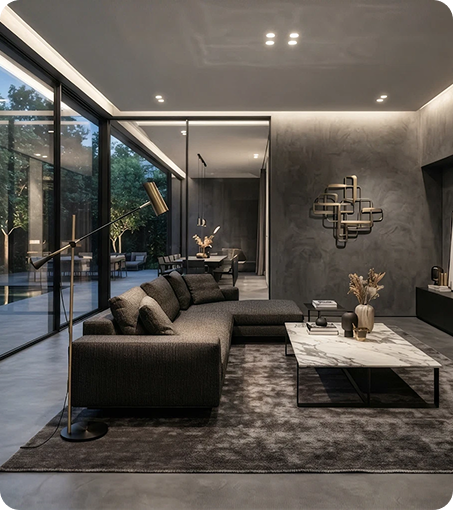
Modern interior design often looks simple on the surface.
Clean lines. Neutral colors. Minimal furniture. Fewer decorative elements.
But when everything is simplified, the surfaces themselves become much more important.
A plain painted wall can disappear into the background. A well-crafted plaster finish can become part of the architecture.
That is one reason Venetian plaster for modern interiors continues to attract homeowners who want something more distinctive than ordinary paint or wallpaper. Instead of relying on patterns, prints, or heavily decorative materials, Venetian plaster creates depth through subtle variations, movement, texture, and light.
The result can feel refined without making a room feel overly decorated.
For homeowners considering a renovation, the appeal is not simply that Venetian plaster looks luxurious. It is the way the finish can change the atmosphere of an entire room.
Key Takeaways
- Venetian plaster can add depth, movement, and character to otherwise simple interior spaces.
- It works particularly well with modern, minimalist, Mediterranean, contemporary, and luxury-inspired interiors.
- Living rooms, bedrooms, feature walls, entryways, and other interior spaces can benefit from a polished plaster finish.
- The final appearance depends on material selection, application technique, texture, sheen, and color.
- Venetian plaster is more than a decorative coating; it can become an important part of the room’s overall design.
Why Venetian Plaster Works So Well in Modern Interiors
Modern interiors often depend on restraint.
There may be fewer colors, fewer patterns, and less visual clutter. Instead of filling the room with decoration, designers often allow architecture and materials to provide the visual interest.
This is where modern Venetian plaster can be especially effective.
Rather than creating a loud pattern, Venetian plaster can produce subtle tonal variation across the wall. Light moves differently across the surface depending on the angle, finish, and application.
That creates a wall that changes throughout the day.
In morning light, it may appear soft and understated.
In the afternoon, natural light can emphasize variations in the surface.
At night, warm interior lighting can bring out a different depth and richness.
The effect is sophisticated without necessarily being dramatic.
Venetian Plaster Interior Walls Create More Than Color
Paint primarily gives you color.
A Venetian plaster wall finish can give you color plus depth, movement, texture, and visual dimension.
That distinction matters in modern spaces.
Imagine a minimalist living room with simple furniture, natural materials, and a restrained color palette. A completely flat wall may look clean, but it may also feel unfinished.
A Venetian plaster surface can provide visual interest without introducing another bold pattern into the room.
The wall itself becomes the design element.
This is particularly useful for homeowners who prefer understated luxury rather than highly decorative interiors.
Venetian Plaster Design Ideas for Contemporary Homes
There is no single way to use Venetian plaster.
It can be subtle or dramatic, matte or polished, warm or cool, uniform or visibly varied.
That flexibility makes it suitable for different design directions.
Soft Neutral Walls
Warm whites, creams, beige, taupe, and other restrained tones can create a sophisticated backdrop for contemporary furniture.
The texture and movement prevent the neutral wall from feeling flat.
Dramatic Feature Walls
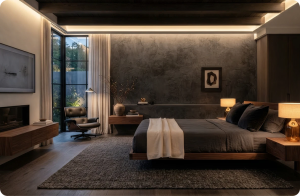
A darker or more heavily worked Venetian plaster surface can create a focal point behind a fireplace, television, bed, dining area, or seating arrangement.
Minimalist Interiors
In a minimalist room, plaster can provide detail without adding visual clutter.
Instead of wallpaper or patterned tile, the wall finish itself provides character.
Mediterranean-Inspired Spaces
Warmer tones and natural-looking finishes can complement stone, wood, linen, and other organic materials commonly used in Mediterranean-inspired interiors.
High-End Contemporary Designs
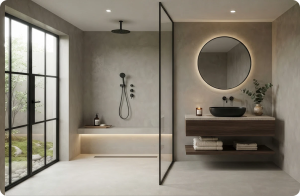
More polished finishes can pair particularly well with glass, metal, stone, and modern architectural details.
The important point is that Venetian plaster does not have to define the entire room.
Sometimes one carefully selected surface is enough.
Venetian Plaster for Living Rooms
The living room is often one of the best places to introduce a luxury wall finish because it is both highly visible and frequently used.
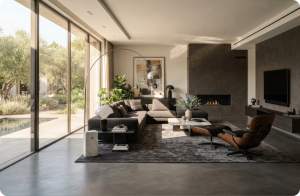
Venetian plaster for living rooms can work particularly well on large uninterrupted walls.
A subtle finish behind a sofa can create a sophisticated backdrop without competing with artwork or furniture.
A more dramatic finish around a fireplace can turn the wall into the room’s focal point.
The right approach depends on the overall design.
For example, if the room already contains dramatic stone, patterned furniture, or bold artwork, a quieter plaster finish may create better balance.
If the furniture and decor are understated, the wall itself can carry more visual weight.
Venetian Plaster for Bedrooms
Bedrooms usually benefit from materials that create a calmer atmosphere.
That makes Venetian plaster for bedrooms an interesting choice.
Soft neutral tones and subtle movement can add warmth without making the room feel busy.
A plaster finish behind the bed can function as a natural feature wall. In a minimalist bedroom, it may provide enough visual character that additional decoration becomes unnecessary.
The finish can also complement other tactile materials such as wood, linen, leather, stone, and natural textiles.
The result is often less about making the room look “fancy” and more about creating a space that feels considered and layered.
Luxury Wall Finishes Without Excessive Decoration
Luxury does not always mean adding more.
In many modern homes, luxury comes from the quality and simplicity of the materials themselves.
That is why luxury wall finishes such as Venetian plaster can work so well in restrained interiors.
Instead of using multiple decorative elements, homeowners can allow one high-quality material to create the visual interest.
This design approach can be summarized simply:
Less decoration, more material character.
A beautifully finished plaster wall can make a room feel intentional without overwhelming it.
The Visual Difference Between Paint and Venetian Plaster
It is easy to underestimate the effect of a wall finish until you see the two surfaces next to each other.
Paint usually produces a consistent visual field.
Venetian plaster can create variation in depth and reflectivity.
That does not mean every Venetian plaster surface has to look heavily textured. In fact, many contemporary applications are quite refined.
The beauty can come from subtle changes in tone and light rather than obvious texture.
This makes the material particularly suitable for modern interiors where homeowners want sophisticated surfaces without rustic or heavily distressed styling.
Polished Plaster Interior Finishes and Light
One of the most attractive qualities of a polished plaster interior is the way the surface can interact with light.
Depending on the finish and application technique, the wall may appear soft and matte from one angle and more reflective from another.
Natural sunlight can emphasize subtle variations.
Pendant lights, wall sconces, and other artificial lighting can create entirely different effects.
This is one reason lighting should be considered alongside the plaster design.
A finish that looks understated in daylight may become a dramatic architectural element under evening lighting.
Instead of choosing the wall finish independently, homeowners should think about how light moves through the room.
Venetian Plaster Benefits for Homeowners
The visual appeal is obvious, but there are other reasons homeowners may choose this type of finish.
A Custom Appearance
Every application can have its own character. The final surface does not have to look like a mass-produced printed pattern.
Visual Depth
The variation in tone and movement can make large walls feel more dynamic.
Design Versatility
Venetian plaster can work with modern, contemporary, Mediterranean, transitional, minimalist, and luxury-inspired interiors.
Seamless Visual Effect
Large areas can appear visually continuous rather than broken up by repeated patterns or grout lines.
Architectural Impact
A carefully selected plaster wall can make an architectural feature feel more intentional.
Long-Term Design Appeal
Because the finish is based on material character rather than a temporary print or trend, it can work across different design styles.
These Venetian plaster benefits are especially relevant to homeowners who want their interiors to feel distinctive without relying on excessive decoration.
Where Should You Use Venetian Plaster?
You do not necessarily need to cover every wall.
In fact, selective use can sometimes create a stronger result.
Consider Venetian plaster for:
- Living room feature walls
- Bedroom walls
- Fireplace surrounds or adjacent walls
- Entryways
- Dining areas
- Home offices
- Hallways
- Architectural feature walls
- Boutique-style residential spaces
The best location is often a wall that naturally attracts attention or has enough uninterrupted surface area for the finish to be appreciated.
Should Every Wall Have the Same Finish?
Not necessarily.
A common mistake in decorative interior design is assuming that using more of a material automatically creates a better result.
The opposite can be true.
A single carefully selected feature wall can create contrast with painted walls.
Two adjacent plaster surfaces can create a more immersive effect.
A full-room application can work when the rest of the design is intentionally restrained.
Think about balance.
If the room already has multiple strong materials, colors, and patterns, a quieter plaster finish may work better.
If the rest of the room is minimalist, the plaster can become more prominent.
Choosing the Right Venetian Plaster Look
The phrase “Venetian plaster” describes a broad family of decorative plaster approaches, so homeowners should think about the desired appearance rather than choosing based only on the name.
Ask yourself:
Do You Want Matte or Polished?
A softer matte finish may feel contemporary and understated.
A more polished surface can create stronger light reflection and a more luxurious appearance.
Do You Want Subtle or Dramatic Movement?
A subtle finish works well when you want texture to remain in the background.
A more expressive finish can become a major focal point.
What Color Fits the Room?
Warm neutrals can create a soft, natural atmosphere.
Cooler shades may feel cleaner and more contemporary.
Darker tones can create drama and intimacy.
How Will Lighting Affect It?
The same finish can look different in direct sunlight, diffused daylight, and artificial lighting.
The final choice should therefore be considered within the actual space.
Venetian Plaster vs Other Decorative Wall Finishes
Homeowners often compare Venetian plaster with wallpaper, paint, textured coatings, stone, and other feature-wall materials.
The biggest distinction is how the material creates visual interest.
Wallpaper generally relies on a printed or repeatable pattern.
Paint provides color.
Stone provides natural variation and physical texture.
Venetian plaster creates its character through the application of the material itself.
That makes it particularly attractive to people who want something that feels refined and architectural rather than obviously decorative.
It also means the quality of installation becomes extremely important.
Why Application Technique Matters
A Venetian plaster wall is not just about the product used.
The application technique has a major influence on the final appearance.
The movement of the material, layering, pressure, burnishing, color variation, and final finish can all affect the result.
Two spaces using similar materials can therefore look very different.
This is why decorative plaster should not be approached like ordinary wall painting.
The installer is not simply covering a surface.
They are creating the surface’s final visual character.
Decorative Plaster Walls as an Architectural Element
One of the most effective ways to use decorative plaster walls is to treat them as part of the architecture.
Instead of asking, “Where can I add some texture?” ask:
“Which part of this room should become more intentional?”
That might be the wall behind a fireplace.
The wall facing the main entrance.
The headboard wall in a bedroom.
A long hallway.
A dining room feature wall.
A curved architectural surface.
This shift in thinking often produces a more sophisticated result because the plaster is supporting the architecture rather than simply decorating it.
Do This, Not That
Do this: Choose the plaster finish based on the room’s overall design.
Not that: Select a dramatic finish without considering the furniture and lighting.
Do this: Use Venetian plaster strategically.
Not that: Assume every wall needs a special finish.
Do this: Think about natural and artificial light.
Not that: Make the final decision using a small sample under only one type of lighting.
Do this: Consider the finish and application technique together.
Not that: Assume the material name alone determines the final appearance.
Do this: Treat the wall as part of the architecture.
Not that: Think of plaster as simply another decorative coating.
Is Venetian Plaster Suitable for a Modern Home?
Absolutely.
One of the reasons Venetian plaster for modern interiors works so well is its ability to provide character without forcing the room into a particular decorative style.
A carefully selected finish can sit comfortably alongside contemporary furniture, natural wood, stone, metal, minimalist lighting, and neutral color palettes.
It can also be used in homes that mix modern and traditional elements.
The material is flexible enough to act as a quiet background or become the main focal point, depending on how it is specified and applied.
How to Decide Whether Venetian Plaster Is Right for Your Space
Start with the room, not the trend.
Look at the walls, furniture, lighting, flooring, architectural details, and colors already present.
Then ask what is missing.
Does the room need warmth?
More depth?
A feature wall?
A stronger connection between materials?
A more luxurious feel?
A softer alternative to high-contrast patterns?
Once you know what you want the wall to accomplish, choosing the right plaster style becomes much easier.
Final Thoughts
The appeal of Venetian plaster for modern interiors is not simply that it looks expensive.
It is that the finish can give a simple space a sense of depth, craftsmanship, and material character without adding visual clutter.
From a calm bedroom to a dramatic living room feature wall, Venetian plaster can adapt to the room rather than forcing the room to adapt to the material.
That is what makes it different from many conventional decorative finishes.
The wall itself becomes part of the design.
And for homeowners looking to create an interior that feels refined, tactile, and intentionally designed, a carefully chosen Venetian plaster wall finish can turn an ordinary surface into one of the most memorable elements in the room.
Frequently Asked Questions
What is Venetian plaster used for in modern interiors?
Venetian plaster is often used on interior walls and feature surfaces to create depth, subtle variation, and a refined decorative finish that works well with contemporary design.
Is Venetian plaster good for living rooms?
Yes. Venetian plaster can work especially well on large living room walls, fireplace feature walls, or areas where the finish can become part of the room’s visual identity.
Can Venetian plaster be used in bedrooms?
Yes. Softer colors and subtle finishes can create a calm and sophisticated atmosphere in bedrooms, especially on feature walls.
Is Venetian plaster considered a luxury wall finish?
It is often considered a luxury decorative finish because of its handcrafted appearance, layered visual depth, and the level of skill involved in achieving certain finishes.
Does Venetian plaster make walls look textured?
It can, but the amount of visible texture depends on the specific technique and finish. Some Venetian plaster applications are highly polished and subtle rather than heavily textured.
Is modern Venetian plaster only available in neutral colors?
No. Neutral shades are popular for contemporary interiors, but Venetian plaster can be customized through different color directions and application approaches.
Is Venetian plaster better than paint?
They serve different purposes. Paint provides a relatively uniform color, while Venetian plaster can add depth, variation, and material character. The better option depends on the desired design result.
Can Venetian plaster be used as a feature wall?
Yes. Feature walls are one of the most effective applications because a single plaster surface can create a focal point without requiring extensive decoration throughout the room.
How long does Venetian plaster last?
The longevity of a Venetian plaster finish depends on the quality of the underlying surface, materials, application, environment, and maintenance. Proper installation and care are important for long-term performance.
Is Venetian plaster difficult to install?
Achieving a high-quality Venetian plaster finish requires specialized preparation and application skills. The final appearance depends heavily on technique, layering, and finishing.